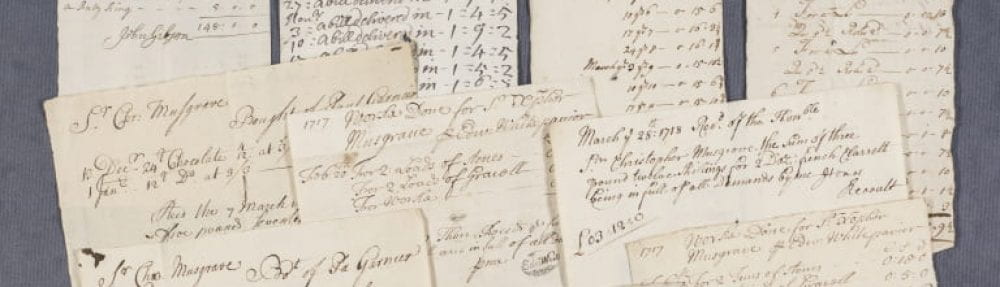
A copy in reverse of William Hogarth’s Plate 3 of A harlot’s progress: In a shabby room in Drury Lane; Moll Hackabout is shown having risen late (the watch shows 11:45), attended by a serving-woman who has lost part of her nose to syphilis; in the background, the magistrate, John Gonson, enters quietly with officers to arrest her; pinned to the window frame are two portrait prints of the hero and heroines of “The Beggar’s Opera”, Captain Mackheath and Polly Peacham, (Polly replaces Dr. Sacheverell in Hogarth’s print), the wig-box of James Dalton, highwayman, sits above the bed, and one of several beer tankards on the floor carries the name of a Drury Lane tavern. A kitten plays at Moll’s feet. A copy of Bishop Gibson’s “Pastoral Letter to …” serves as a butter dish. Above the window on the left is a print after a Titian painting depicting the angel staying the hand of Abraham as he is about to slay Isaac. Medicine bottles on the window sill suggest that Molly is already ill with the disease that will later kill her.
- Title: A harlot’s progress. Plate III [graphic] : The compleat trull at her lodgings in Drury Lane = Elle est reduite à la misère dans son logement de Drury Lane / invented & painted by Wm. Hogarth.
- Publication: [London] : [publisher not identified], [not before 25 March 1768]
Hogarth 768.03.25.11+ Box 210
Acquired December 2019
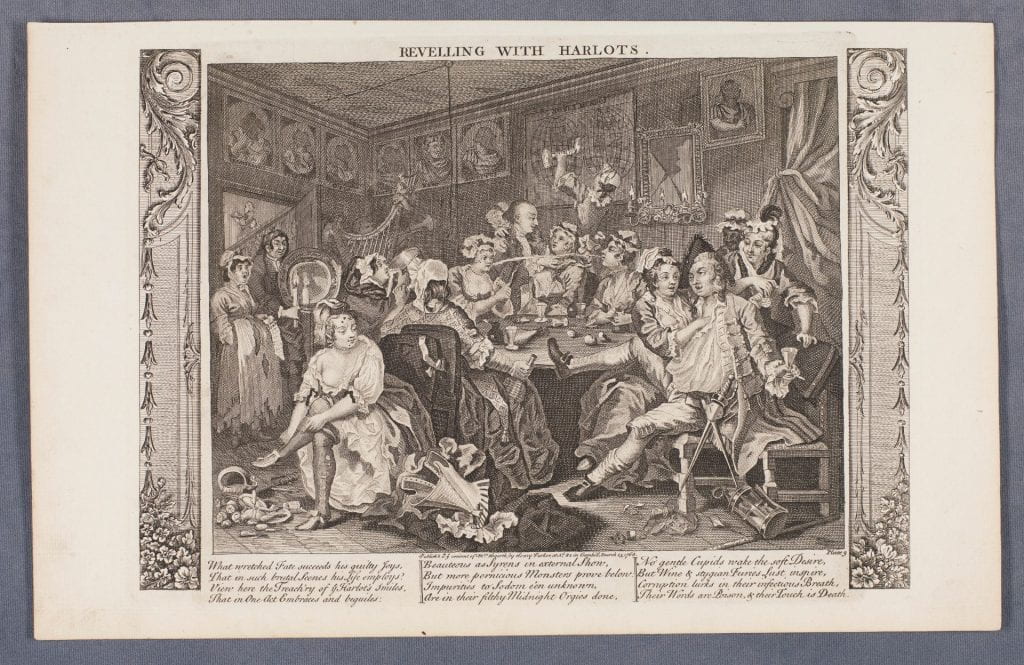 Copy in reverse of the first state of Plate 3 of Hogarth’s ‘The Rake’s Progress’ (Paulson 134): A room at the Rose Tavern, Drury Lane (after the painting at Sir John Soane’s Museum); to left, Tom, surrounded by prostitutes and clearly drunk, sprawls on a chair with his foot on the table; one young woman embraces him and steals his watch, another spits a stream of gin across the table to the amusement of a young black woman standing in the background; one woman drinks from the punchbowl; another is removing her clothes in order to perform “postures”; to the right, a harpist and a door through which enters a man holding a large dish and a candle, and a pregnant ballad singer holding a sheet lettered “Black Joke”; on the walls hang a map of the world to which a young woman holds a candle and framed prints of Roman emperors, all (except that of Nero) damaged. A second version of the paintings is at the Atkins Museum (Kansas City, Missouri).
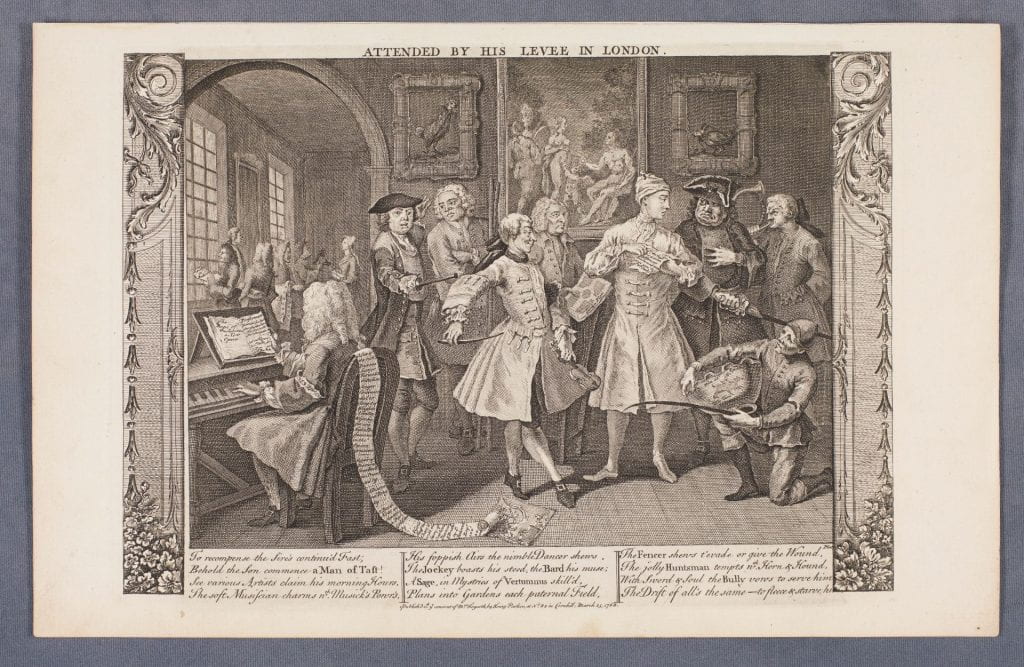 Copy (not reversed) of the first state of Plate 2 of Hogarth’s ‘The Rake’s Progress’ (Paulson 133): a fashionable interior with Tom, in elegant indoor dress, surrounded by tradesmen vying for his custom: a poet, a wigmaker, a tailor, a musician (with a list of presents given by aristocrats to the popular castrato, Farinelli), a fencing master (said to be named Dubois), a prizefighter with quarter-staffs (said to be James Figg), a dancing master (John Essex?), a landscape-gardener (said to be Charles Bridgeman), a bodyguard, a huntsman and a jockey.–British Museum online catalogue.